
What to Wear for Headshots (And Why It Matters More Than You Think)
"What should I wear?"
It's the question I get asked more than almost any other, and honestly, it makes sense. You can control your outfit. You can't always control the weather, the lighting, or how you're feeling that morning, but what you put on before you walk in? That's fully in your hands. So I figured it was time to actually sit down and write out everything I tell clients when they ask me this, instead of answering it one text message at a time.
Why Your Outfit Matters More Than You'd Think

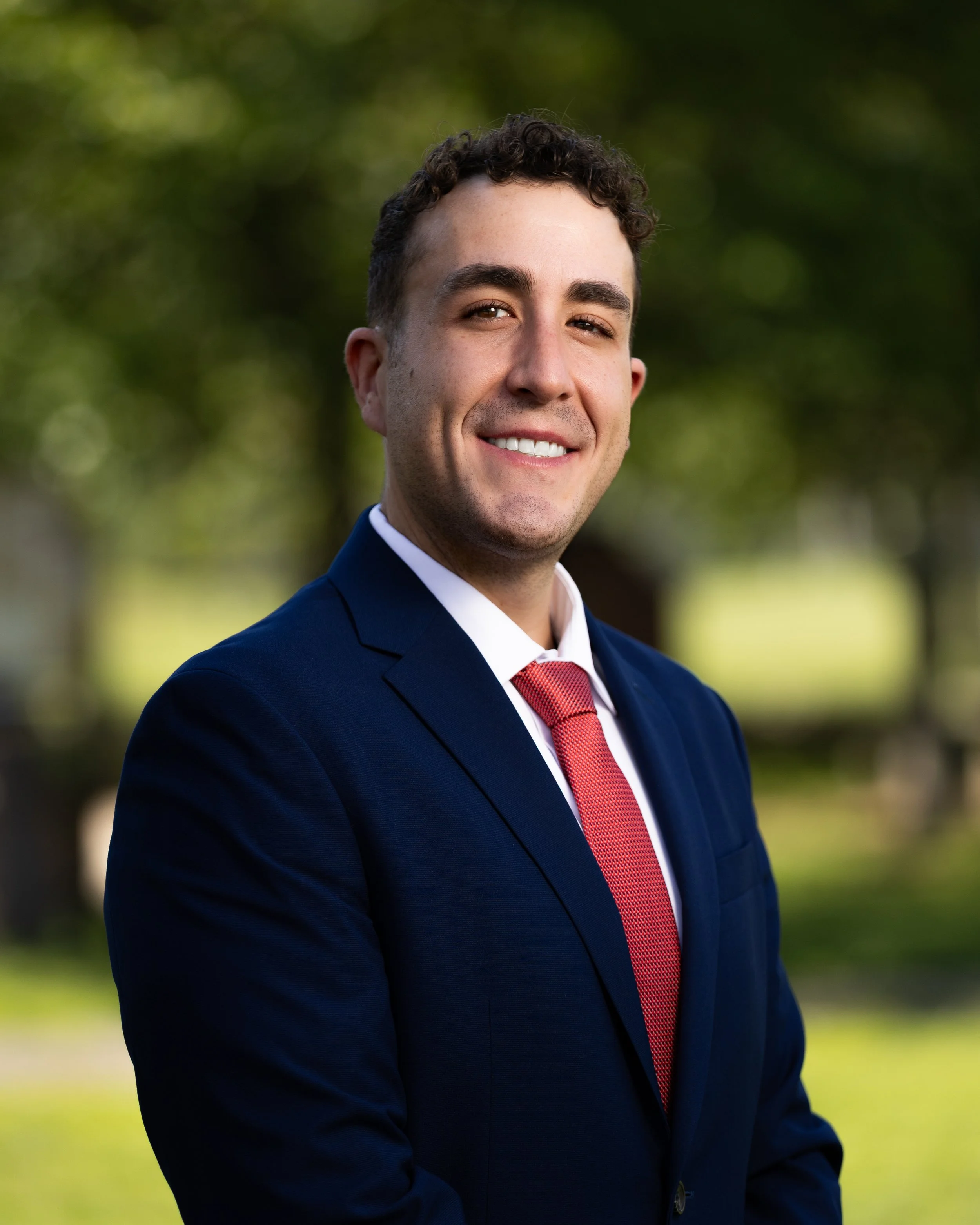
A headshot isn't just a photo, it's usually the first impression someone gets of you before they've ever spoken to you. It's on your LinkedIn, your company's "About Us" page, your email signature, maybe even a business card. People are going to look at it and make a snap judgment about who you are before you say a single word. That's a lot of pressure to put on one photo, but it's also exactly why the outfit matters so much. The right clothing doesn't just make you look "nice", it makes you look like you, on your best day, ready for whatever room that photo is going to end up in. I've had clients show up looking fantastic and still feel unsure the second they sit down, simply because they weren't confident in what they had on. And I've had clients in something dead simple, a solid button-down, nothing fancy, who felt completely at ease because they knew they looked good. Confidence translates directly into the photo. If you feel good in what you're wearing, it shows on your face, in your posture, in the way you hold yourself. That's not a small thing.
Solid Colors Are Your Best Friend
If there's one piece of advice I give more than any other, it's this: keep it simple, keep it solid. Busy patterns like stripes, plaids, tight checkered prints can actually distort on camera. It's called a moiré pattern, and it happens when a fine repeating pattern interacts weirdly with the camera sensor, creating this strange rippling or shimmering effect that wasn't actually in the fabric. It's distracting, and it pulls attention away from your face, which is the whole point of a headshot. Solid colors, on the other hand, photograph cleanly every time. Navy, charcoal, deep jewel tones, classic black and white. These are all safe, professional choices that won't fight with the lighting or distract from you. If you want a little visual interest, a subtle texture (like a fine knit) reads fine on camera, just steer clear of anything with a lot of contrast or repetition in the pattern.
Fit Beats Trendy, Every Time
I'll say this as plainly as I can: an outfit that fits you well will always look better in a photo than an outfit that's "in style" but doesn't fit quite right. Headshots are close-up, detailed shots. A shoulder seam that sits wrong or a collar that's gaping will show up clearly, and it'll pull focus away from your face. You don't need to buy anything new for this. Just take five minutes before your session to actually try on what you're planning to wear and make sure it sits the way you want it to. A blazer that fits through the shoulders, a top that isn't too tight or too loose, pants or a skirt you're not constantly adjusting. Comfort and fit go hand in hand here. If you're not moving around trying to fix your clothes, you're free to actually focus on relaxing and being yourself in front of the camera.
A Quick Story: The Park Session
I had a client come to me recently who was updating his LinkedIn profile after a job change. He was making moves with a new business and needed something professional and fast. He showed up prepared and comfortable: suit jacket and tie up top, regular jeans on the bottom. And that's a trick worth knowing if you're doing a headshot. Since we're only really working with everything from the chest up, what you've got on below doesn't matter nearly as much. If you work from home, even better, because odds are your "work attire" is already hanging up somewhere nearby. We did the session at a park in Mullica Hill. I could've kept it simple with a plain, even background the whole time, but instead we moved around a bit. An open grassy area for that clean, classic headshot look, and then over to a baseball field dugout for something with a little more texture and personality. He came in wanting straightforward headshots, but it never hurts to break away from an all-white or all-green backdrop and get some variety while you're already there. The whole thing took maybe 20 minutes. Quick, easy, and he walked away with more range in his gallery than he probably expected going in.
Think About Where the Photo Is Going
Before you decide what to wear, it helps to think about where this headshot is actually going to live. A headshot for a corporate LinkedIn profile is going to call for a different energy than one for a personal branding page, a real estate listing, or an actor's portfolio. Ask yourself: what industry am I in? What tone am I trying to set? Are people expecting formal, business-casual, or something a little more relaxed and approachable? There's no universally "correct" outfit, there's only the outfit that's correct for your goals. A financial advisor and a yoga instructor are both going to want to look polished and put-together, but what that means will look pretty different on each of them, and that's exactly how it should be.
Skip the Logos and Loud Accessories
This one's simple: avoid clothing with big logos, text, or graphics. They date the photo, they can be distracting, and depending on where the headshot ends up being used, a visible brand name can look a little out of place. The same goes for accessories. A statement necklace or bold earrings can be a nice touch, but anything too large or reflective can catch the light in ways that pull focus. When in doubt, keep the accessories minimal and let your face do the talking.
A Few Small Details That Make a Big Difference
Iron or steam your clothes beforehand. Wrinkles show up more than people expect, especially in close-up shots.
Avoid anything brand new. New clothes can have store creases or just not sit as naturally as something you've already worn a few times.
Bring a lint roller. Dust, pet hair, stray threads — they're a lot easier to deal with before the camera comes out than after.
Check the neckline. V-necks and collars tend to photograph more flatteringly than crew necks or turtlenecks pressed right up against the chin, though this really depends on your personal style and comfort.
Layers add depth. A blazer over a top, or a cardigan over a button-down, can add some nice visual variation without overcomplicating things.
My Favorite Tip: Bring a Second Option
Here's something I tell almost every headshot client, and it's probably the single most useful piece of advice in this whole post: bring a backup outfit, or at least a jacket or a different top to change into halfway through. Even a small change like swapping a blazer for a casual button-down, or changing from one solid color to another gives you real variation in your final gallery. Instead of walking away with five photos that all kind of look the same, you get a mix: something more formal, something more relaxed, different expressions, different energy. It's a simple move that makes a noticeably bigger difference in your final set of images than most people expect. Now say you didn’t bring another solid color shirt or jacket, with the power of Photoshop this can be easily adjusted so while its not the end of the world if you forgot.
A Quick Story: The Living Room Session
Another client I worked with needed an updated headshot for his company's website, and he came in with a pretty specific request: the background had to be a very particular color. Most photographers can't just conjure up an exact shade on demand, but he made it easy. He gave me the precise hex code ahead of time, so there was no guesswork involved. I brought my flash equipment and a white backdrop I could light to match, and we set up right in his living room. Now I was using a white backdrop for this, but through editing I was able to change the background to the exact color he needed which matched his companies staff page. Sometimes it really is easier for me to come to where the client is instead of the other way around. From there, we ran through a handful of outfit variations, such as a suit jacket with a tie, jacket with no tie, no jacket at all, just the shirt and tie. Every combination gave the final gallery a different feel, so instead of one static "corporate headshot," he ended up with a set of images he could actually choose from depending on where each one was going to be used. That's the whole idea behind bringing options: it's not about needing five different outfits, it's about giving yourself the flexibility to end up with photos that actually fit different purposes.
It's Okay to Feel a Little Nervous
If the idea of being in front of a camera makes you a little uneasy, you're far from alone. Maybe you're worried you'll blink at the wrong moment, or you feel self-conscious about your smile. That's completely normal, and honestly, it's something I plan for. Part of my job isn't just working the camera, it's making sure you feel genuine while you're in front of it. Sometimes that means cracking a joke, sometimes it just means reminding you there's nothing to be nervous about. And on a practical level, it helps to know that we're taking multiple photos throughout the session anyway so if one shot catches you mid-blink or your smile looks a little off, there are plenty of others to choose from (and if it ever came down to it, small fixes like a stray closed eye can even be blended in from a different frame during editing).
Final Thoughts
At the end of the day, the best outfit is the one that makes you feel like yourself. Polished, comfortable, and confident. Solid colors, good fit, minimal distractions, and a backup option to change into are really all it takes to walk into your session feeling prepared. The rest though, the posing, the expressions, making sure the lighting is doing you justice, that part's on me. If you're in South Jersey and thinking about booking a headshot session, I'd love to help you get photos you're actually excited to use. Reach out and let's get something on the calendar.